
astraea.net/blog

blogging the big picture

March 2nd, 2010

Uncyclopaedia, the content-free encyclopedia that anyone can edit.

Uncyclopedia, the content-free encyclopedia that anyone can edit.

Actually its quite insightful and funny.  Reminds me of Yes Men or Onion.  Worth a look for a reality check or when you’re searching for the meaning of life.

For Example:

Earth (or The Earth as it is known by its self-absorbed inhabitants) is the third planet from the star Sol. The planet’s most visible intelligent life, known simply as humans, believe that their small ball of rock is in fact the only planet in the entire universe that is inhabited. It is entirely understandable that they would leap to such a ridiculous conclusion considering that Earth’s inhabitants have never journeyed anywhere else in the universe. What’s more, they’ve even ignored the best vacation spots in their own star system. This is probably due to the fact that Earth’s inhabitants are incredibly dull and spend most of their time either watching TV or killing each other. This has led the planet to be classified as Mostly Harmless.

February 25th, 2010

KDE 4.3, Opensuse 11.2 – yes, I like it.

So, I finally bit the bullet and installed OSS 11.2 which uses KDE4 rather than KDE 3.5.  It was a bit of a learning curve, but so far I like it.

I had to make sure I had all the package repositories necessary, including compiz and skype supporting libraries, which are not in the community list, but easily accessible from opensuse.com.

It took a couple of days to get used to the new desktop with plasma widgets.  But they are quick, handy, stable and look good.

The other issue was setting up my mice – I use the touchpad right-handed and the external (wireless) mouse left handed and switch between them depending on whether I’m at my desk or on the road.  Previously with Sax2 there was a configuration module for mice, but not any more because now mice automatically configure, but its difficult to differentiate settings.  I had to fiddle a bit and used this guide to remap the mouse buttons on the external mouse.

All in all an improvement and a fairly manageable learning curve.  I would have had to switch to KD4 eventually and the transition was fairly painless and offers an enhanced desktop.  Probably easier than moving from Doze Vista to 7 and done at my choice.  (I also installed gnome and have played on that desktop a bit, but I still prefer KDE for configurability, and now even looks are sexier.)  Yes, I like it.

Thanks to linux programmers, hackers and users for making open computing the best experience.

See how it looks … A little flash of the desktop.

February 23rd, 2010

Beyond the web … with Savage Chickens

OK, maybe I do spend a lot of time on the computer.  But media really can get in the way of human development.  And a virtual interaction is always controlled, rather than natural.  So try to give up the computer/mobile phone for a day a week, and you might stay sane.

February 18th, 2010

Reacting to change

From Sabre Corportate Development

There are 6 major stages that can easily be identified in a response to change. People will progress through them at different rates and the introduction of new change initiatives atop existing ones can actually force people to go up and down these stages or to regress.

Stage 1 – Shock

In a similar style to a grief reaction people may take some time to address the reality of what has just occurred. People can’t really do much at this stage but come to grips with what the new situation entails.

Stage 2 – Denial

A common reaction may be to deny the impact of the change. “It doesn’t relate to me, and it doesn’t affect my department”. A ritualised form of ‘farewell” to the old ways akin to a funeral sometimes helps.

Stage 3 – Anger

It is important to openly deal with what angers people. “Why did we need to change at all when the way we were doing things was fine?” Some may actively resist or attack the change. Anger de-skills and can engender a mood of self-preservation. This may promote risk avoidance and hold back innovation.

Stage 4 – Passive Acceptance

The commencement of accepting that the way things are done has indeed changed and that the old ways are in fact gone. “I suppose if we have to deal with this, we might as well get on with it”

Stage 5 – Exploration

A willingness to look at actual methods for implementing and taking the change process forward. “How do we actually go forward from here?”

Stage 6 – Challenge

Actually going forward. Ensuring that the change process is the catalyst for continuous improvement and not just there as an obstacle. What stage is the team in now, and how do we move forward?

February 18th, 2010

Happiness or a broken heart – your choice

Science is joining the enlightened, yogis and holonics in confirming that being happy is healthy.

A US study shows that being happy and positive has an impact on the risk of heart disease.  They also said that it is the ability to be happy that is the challenge.  The excuse – that it is difficult to change behaviour.  Which is just not true – it is simply an excuse that we use to procrastinate: to put off dieting or to excuse anger.  Or we rationalise that we are stuck in a situation that we can not change, a job for example.

But we all know that the reality is that we make choices about our values and behaviour.   And we know that being happy is not about being hedonistic.  It’s about looking after our basic needs (food and shelter) and then engaging in our communities and then helping in our communities.

Live life.
Be happy.
Love nature.

BBC: Happiness wards off heart disease

February 4th, 2010

Blog for mobile phones

I just installed a plugin to make astraea.net/blog render quickly on mobile phones.  The Mobilize by Mippin Wordpress Plugin.  Hope phoneheads enjoy it!  ;-)

January 27th, 2010

2009 Ends Warmest Decade on Record

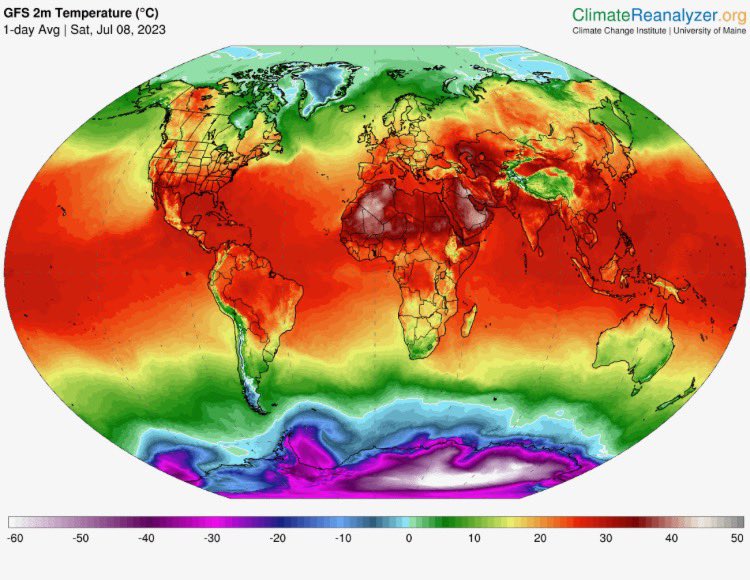
Except for a leveling off between the 1940s (WW2) and 1970s (oil embargo), Earth’s surface temperatures have increased since 1880. 1885 is the year the first automobile went into general production. Mmmmmmmm … is there a connection?

The last decade has brought temperatures to the highest levels ever recorded, and the last year of the decade (2009) was tied for the second warmest year in the modern record.  Although 2008 was the coolest year of the decade, due to strong cooling of the tropical Pacific Ocean, 2009 saw a return to near-record global temperatures, despite an unseasonably cool December in much of North America, Europe, and Asia. The year was only a fraction of a degree cooler than 2005, the warmest year on record, and tied with a cluster of other years—1998, 2002, 2003, 2006 and 2007 1998 and 2007—as the second warmest year since modern recordkeeping began in 1880.

Earth Observatory: 2009 Ends Warmest Decade on Record

Earth Observatory: 2009: Second Warmest Year on Record; End of Warmest Decade

January 21st, 2010

Prisoners have sentences reduced if they practice yoga. Yes!

Prisoners in the Indian state of Madhya Pradesh are being freed early if they complete yoga courses.  For every three months spent practising posture, balance and breathing the inmates can cut their jail time by 15 days. The authorities say the lessons help to improve the prisoners’ self-control and reduce aggression.  Some 4,000 inmates across the state are benefiting from the scheme, and many go on to become yoga instructors.

BBC: India inmates take yoga to reduce their jail sentences

January 21st, 2010

Obama spreading GMO. What the …?

Yes, it’s true.  GMO deception is spreading fast and soon agriculture will be jeopardised by transgenic pollination of GMO alfalfa.  If you thought the economic crisis was bad, you ain’t seen nothin’ yet.  How about famine in America.

From OCA’s review of Genetic Contamination:

Barack Obama, despite promising us “change we can believe in,” is unfortunately turning out to be just as pro-GMO as the preceding Bush and Clinton administrations, packing the USDA and other government bureaucracies with Monsanto men and biotech cheerleaders such as former Iowa Governor, Tom Vilsack, named “Biotech Governor of the Year” in 2001, now serving as USDA Secretary.  Vilsack, notorious for flying around in a Monsanto company jet during one of his previous election campaigns, is now busy trying to get the court-ordered ban on Roundup Ready alfalfa lifted by issuing a new draft environmental impact statement (EIS) that denies or downplays the obvious environmental (genetic pollution and creation of herbicide-resistant superweeds) and human health hazards of GM alfalfa.

Alfalfa is the fourth most widely grown crop in the U.S. and a key source of dairy forage and hay. The first perennial crop to be genetically engineered, GM alfalfa can regenerate itself from its root-stock. It is open-pollinated by bees, which can cross-pollinate at distances of several miles, spreading Monsanto’s patented, foreign DNA to non-GMO and organic crops. Widespread GMO-contamination of organic alfalfa is inevitable if the Obama Administration successfully distorts science and ignores public opinion and allows Monsanto’s GM Roundup Ready alfalfa to be planted across the U.S.

Millions Against Monsanto Campaign

January 21st, 2010

Radical opening up of the auto industry

From The Ecologist:

The open-source hydrogen car set to change the industry by Alex McDonald

Cars are evil, right? But what if they ran on hydrogen, did 300 miles per gallon, were leased rather than owned, and were produced under an open source business model…

We have often been introduced to the car of tomorrow, but one company has now created a car with the future in mind. But it is about far more than just a car, it’s about a business model that is challenging the very architecture of the auto industry.

Riversimple’s network electric car is a hydrogen fuel cell powered car, with unique technologies that enable it to run on a 6kW fuel cell, with a fuel consumption equivalent to 300 miles per gallon and greenhouse gas emissions at 30g per km, well-to-wheel – less than a third of that from the most efficient petrol-engine cars currently available.

It also has the potential to be 10 times cleaner still if the hydrogen is produced from renewable energy.

Open source

But what is extraordinary about Riversimple is that their business model is trying to move away from the current auto industry practice that has left us with the inefficient, one-size-fits-all car.

The first departure from the conventional business plan is that the designs of the car will be released under an open source licence. This allows people to freely build on ideas and designs, speeding up innovation and enabling technologies to be quickly improved, meeting the needs of people rather than markets.

‘There is such a yawning gap between the environmental performance of cars and what is sustainable, that I don’t believe a purely competitive world can ever get us there,’ says Hugo Spowers, the brains behind Riversimple.

‘[open source] really does produce this constant and very rapid drive toward absolute excellence, which I think is needed in the current circumstances. I have precious little faith in regulation ever pushing us in that direction.’

Shared learning

To aid the development of the open source hardware community, Riversimple has set up the 40 Fires Foundation, an open-source hardware group that anyone can join to share expertise and develop technologies.

Before any official launch, the foundation has already registered over 300 people with expertise in various areas, showing the huge potential for an open-source technology community.

And this potential can be far reaching:

‘Open source allows [developing] countries to build their own technological capacity without having to be liable for any cash fees to the first world,’ says Spowers. The foundation can also take briefs from other countries, adapting technologies as required.

Small-scale production

Complementing the open source philosophy, the manufacturing requirements of the car mean that the size of production plant will be greatly scaled down.

The low component count of the cars and their carbon composite bodies, means that smaller plants will be needed. Riversimple expect one plant to manufacture around 5,000 cars a year, unlike the production of the conventional pressed steel bodies, where a factory will spit out about 300,000 a year of the same model – necessary for the economies of scale.

‘When you are doing it at that scale,’ says Spowers, ‘the breakeven volume at which a model becomes commercially viable is 100 times lower. So you can genuinely build cars that suit people’s needs, rather than the opposite extreme which is the lunacy of the “world car”.’

As a result, the industry can become more distributed: it will be possible to have smaller plants in different places, making different models that are more suitable for different geographies or cultural needs.

Cars will not be sold

Another significant departure from the conventional business model is that the cars will be leased, not sold. The leasing will include the maintenance of the car, the fuel and the recycling of the car at the end of its life.

The idea behind leasing the cars is primarily to bring the incentive of making the cars more sustainable in their production, maintenance and use, back to the manufacturer.

‘There’s no driver for resource efficiency if we sell the car,’ says Spowers. ‘If we sell the cars… we have a direct incentive to sell as many cars as possible, so there’s absolutely no commercial sense to build in longevity, low running cost or fuel efficiency – the opposite in fact.’

In providing the opportunity to produce niche specific cars, Riversimple will also be paving the way for a wider cultural shift in car use. The leasing of the cars will undermine the ‘commodity value’ of the car, leaving drivers only with the use value of the car and, as designs develop and specialised cars are produced, people will – in theory – lease the right car for the right job, rather than the right car for their image.

Car clubs

With this in mind, Riversimple expects car clubs to be major customers.
‘Car clubs tease apart the functionality of cars,’ says Spowers.

For most people, he says, ‘95 per cent of their [car] requirements will be covered by a certain set of needs, but they buy a car to meet 100 per cent of their needs, and that’s dictated by the last 5 per cent. If 95 per cent of their requirements is on their own, commuting a 20 mile distance and then every couple of weeks they’ll go away with the family, they’ll buy an estate car for that one journey every couple of weeks. …

‘If you have car clubs – and they really have mushroomed recently – it means that people can buy the car for 95 per cent of their needs and rely on the car club for the 5 per cent. I think that is a really crucial element in moving towards much more niche, specific, appropriate vehicles for appropriate uses.’

Riversimple cars are expected to be on trial in the UK from 2012. Around 50 cars will be leased in one or two cities, supported by the local authority.

Several local authorities have expressed interest including Oxford and Leicester.

Hydrogen fuel

One of the major challenges for the Riversimple concept is getting the hydrogen to the cars. In partnership with BOC and participating Local Authorities, Riversimple hopes to overcome this by starting small and building the infrastructure as demand grows.

Hydrogen refuelling stations will be built in the participating cities, and, as the cars and their hybrids become more popular, the network will build and eventually become extensive enough to support intercity travel.

The efficiency of the Riversimple car is expected to make the transportation of enough hydrogen to fuel stations feasible.

Opportunity

Spowers himself conveys an infectious sense of urgency.
‘There’s a window of opportunity of about ten years in which I think we’ve got a chance of establishing this,’ he says. ‘In about 10 years time, people will have a steel bodied fuel cell car with probably a 60 KW fuel cell system in a commercially viable, ordinary five-seater family car.

‘The problem with that is that it will require about four times as much fuel than a car built on the principles we are advocating. And once fuel cell cars are available in the conventional steel bodied platform, then it will be very much harder to ever go back and re-address the fundamental architecture. I don’t think you’ll be able to do it.’

If the opportunity is missed, says Spowers, cars will be made for the mass market, people will depend on one-size-fits-all and innovation will remain slow.

Useful links

Riversimple